
'In the luxury car segment, the adoption of EVs is almost double compared to the mass market.'

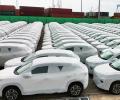
VF 7 and VF 6, as the models are called, will go on sale in August after the inauguration of VinFast's plant in Thoothukudi in Tamil Nadu, and deliveries will follow later.
"My understanding is that the rules are weighted in favour of big cars, even though smaller cars emit fewer emissions per passenger, use less material, and consume less fuel," Bhargava said in an interview with Business Standard.
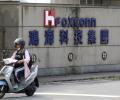
A day after news emerged that Foxconn Technology Group was "forced" by Beijing to send back its Chinese engineers and technicians from its Tamil Nadu plant, sources indicate that the global electronics giant has already drawn up an alternative plan to rescue its India iPhone 17 production by bringing in experts from mainly Taiwan and the US.

Rapido - one of the largest players in the bike taxi commute business - says the new guidelines released by the central government on July 1, permitting "non-transport motorcycles" for aggregators, no longer give states the option of rejecting the revised policy.

Shubhanshu Shukla's first seven days in space have combined science, ceremony, and moments of levity.

The only other company working on hydrogen cars in India is Toyota Kirloskar Motor.

Despite the benefits of hybrid technology, a lack of government backing and few launches have kept the segment from gaining ground.

When mosquito numbers cross safe limits in any area, automatic alerts will be sent, and civic teams will carry out spraying or fogging operations.
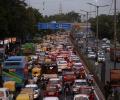
Truck rentals saw a positive momentum across most key trunk routes due to an increased pre-kharif agricultural activity and a resilient manufacturing sector. The Kolkata-Guwahati-Kolkata corridor witnessed a month-on-month (M-o-M) rise of 2.4 per cent, while the Mumbai-Chennai-Mumbai route grew by 1.9 per cent and the Delhi-Hyderabad-Delhi route saw a 1.6 per cent increase in truck rentals, said June edition of the Shriram Mobility Bulletin.

Whether in cricket or business, Kohli continues to play the long game.
The Foxconn move may have been prompted by the Chinese government's focus on strengthening its supply chain.

'There is no doubt about the antiquity of Tamil Nadu.'

Apollo Hospitals Enterprise Ltd (AHEL) on Tuesday said its ongoing restructuring aims to unlock the value of its omni-channel pharmacy and digital businesses, while enhancing shareholder returns. The newly-formed entity is expected to achieve a year-on-year growth rate of 22-23 per cent, driven by the e-pharmacy segment and other business verticals, with a revenue target of Rs 25,000 crore by the financial year 2027.

The share of EVs in the luxury segment rose from 7 per cent in January-May 2024 to 11 per cent during the same period in 2025, marking a 66 per cent growth in the electric luxury segment.

'Today, we have 2 million active drivers earning through our platform every month.'

The 17 rare earth elements that are at the centre of the current crisis are critical components of everyday products -- from cars to jet engines to electronics like smartphones and flat-screen TVs.

Since April 4, around 35 importers in India have either not received any shipment of the magnets or have not been granted the import licences by China.

State-run Hindustan Aeronautics Limited has won a bid under which it will receive technology from the Indian Space Research Organisation for the end-to-end commercial production of the Small Satellite Launch Vehicle (SSLV), a first for the industry as India seeks to become a global hub for small satellite manufacturing and launches.

Dysprosium and terbium, two heavy rare earth elements with unique properties, are not available in extractable quantities in India.
